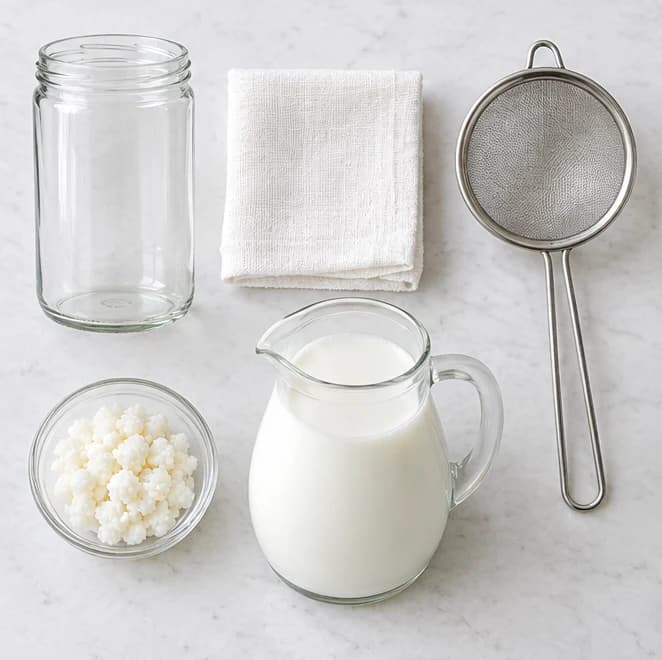
What you need
Milk kefir grains are soft clusters of bacteria and yeasts that ferment milk. They can be strained out and used again to make your next batch of kefir.
- Fresh, active milk kefir grains.
- Fresh pasteurised whole milk. Our grains are maintained with organic milk.
- A clean glass jar with room above the milk.
- A clean, close-weave breathable cloth and a band or cord to secure it without gaps.
- A fine food-safe sieve, a spoon and a clean container for the finished drink.
A food-grade plastic sieve is simple to use; brief contact with stainless steel is also acceptable. Avoid storing or fermenting kefir in reactive metal containers.
Feed. Ferment. Enjoy.
These instructions are for fresh, active grains, rather than a powdered starter or dehydrated grains. Use the milk quantity in the care notes supplied with your portion: there is no single ratio that suits every culture.
- Start clean. Wash your hands and use clean equipment. Place your grains in the jar.
- Add fresh milk. Follow the amount recommended for your grains, leaving space at the top.
- Cover securely. Use a clean breathable cover with no gaps for insects. Keep the jar out of direct sunlight and away from a cooker.
- Give it time. A steady room temperature around 20–24°C is a practical starting point. Check from about 12 hours; an established batch often takes around 24 hours. The grains, milk and room temperature all affect the timing.
- Look for a change. The milk normally thickens and develops a pleasantly tangy aroma. Appearance and smell alone do not certify food safety; see the checks below.
- Strain gently. Catch the grains in the sieve. Put them straight into fresh milk for the next batch.
- Chill and enjoy. Cover and refrigerate the finished kefir. Add fruit and other flavourings after the grains have been removed.
Looking after your grains
Fresh milk and a steady routine matter more than fuss. Routine rinsing is unnecessary. If your grains have travelled, they may need several feeding cycles to settle into their new kitchen.
If batches finish very quickly, try a shorter ferment, less grain or more milk. If they are slow, check the room temperature and avoid increasing the milk too quickly. Change one thing at a time.
For a short break, keep the grains in fresh milk in the fridge and refresh the milk weekly, following your supplier’s notes. This is a temporary pause, not indefinite storage. Contact us before planning a longer break.
What to look for
A little separation into curds and pale whey can happen when fermentation progresses further. A shorter batch or a different milk-to-grain balance may help next time.
Stop if you see fuzzy growth, unusual pink, green or black discolouration, or notice a rotten smell. If mould is present, discard the drink and the grains; do not skim it or taste a suspect batch. Clean the equipment thoroughly before starting again with new grains. If a surface film is uncertain, stop using the batch and ask for advice.
Keeping it fresh
Use pasteurised milk. Fermentation does not replace pasteurisation. Keep finished kefir and cold dishes at 5°C or below. Make small amounts and follow your supplier’s storage advice; this guide does not establish a fixed shelf life.
Milk kefir contains milk allergens and is not guaranteed lactose-free. Enjoy it as a food; it is not a treatment or a prescribed daily dose.
Find something good to makeFurther reading
This guide draws on Cultures for Health’s grain instructions, Yemoos’ equipment and care guidance and the Food Standards Agency’s milk advice. Follow the instructions supplied with your particular grains.